Amazon Bedrock Explained: AWS’s AI Platform in 2026
 sonam seo
Introduction
Two years ago, adding AI to a business application meant hiring ML engineers, provisioning GPU servers, and negotiating directly with each AI vendor separately. Today, you just make one API call. That’s Amazon Bedrock, and in 2026, it has quietly become the most important piece of infrastructure on AWS.
What is Amazon Bedrock?
Amazon Bedrock is AWS’s fully managed AI platform that gives businesses access to nearly 100 foundation models from providers including Anthropic, OpenAI, Meta, etc., through a single unified API, with no infrastructure to manage and no upfront commitment. You pick a model, send a prompt, and pay per token used.
It’s part of AWS’s broader strategy of embedding AI across every layer of the cloud, but Bedrock is where that strategy becomes tangible for businesses building real products.
How does Amazon Bedrock work?
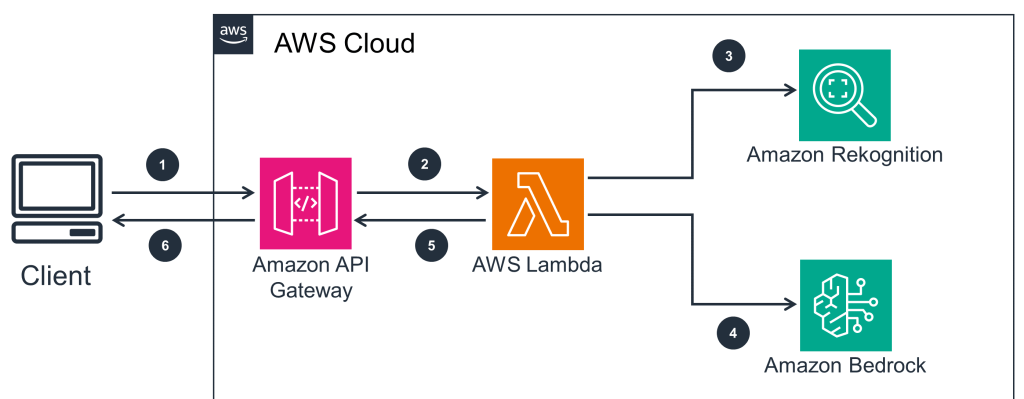
You can work easily with AI, thanks to Bedrock. Instead of training models, managing servers, or juggling multiple vendor contracts, you connect to Bedrock and access the world’s best AI models on demand.
Here’s the part that makes it genuinely useful: you can switch between models without rewriting your application. One API endpoint. One security model. One AWS bill. Whether you’re using Anthropic’s Claude for complex reasoning, Meta’s Llama for cost-efficient tasks, or Amazon’s own Nova models for multimodal work, the code stays the same. Only the model parameter changes.
Bedrock powers generative AI for more than 100,000 organizations worldwide, including startups to global enterprises across every industry. That’s not a beta product. It’s production infrastructure.
Nearly 100 AI Models. In One Place.
Most competitor articles are still citing “60+ models.” That’s out of date. Amazon Bedrock now provides nearly 100 serverless models, offering a broad and deep range from leading AI companies so customers can choose the precise capabilities that best serve their unique needs.
Here’s how the catalog breaks down:
| Provider | Key Models | Best For |
| Anthropic | Claude Opus 4.6, Sonnet 4.6, Claude 4.5 | Complex reasoning, coding, and analysis |
| OpenAI | GPT-OSS 20B, GPT-OSS 120B | General-purpose, OpenAI compatibility |
| Meta | Llama 4, Llama 3.3 70B | Cost-efficient, open-weight tasks |
| Amazon | Nova 2.0, Nova Pro, Nova Lite, Nova Micro | AWS-native, multimodal, low latency |
| Mistral | Mistral Large 3, Ministral 3B/8B/14B | European compliance, multilingual, edge |
| NVIDIA | Nemotron 3 Super, Nemotron Nano 2 | High-performance reasoning, coding |
| DeepSeek | R1, V3.2 | Cost-efficient deep reasoning |
| Gemma 3 | Lightweight multimodal, local deployment | |
| Others | Qwen3 Coder, Kimi K2.5, MiniMax M2, Stability AI | Specialist and multimodal tasks |
This implies that you’re not locked into a single AI vendor’s pricing or capabilities.
If Anthropic releases a better model next month, you can switch on Bedrock without touching your infrastructure. If OpenAI’s pricing spikes, you route to an alternative.
With access to hundreds of top foundation models and the ability to swap them without rewriting code, Amazon Bedrock gives you the flexibility to build and innovate as your needs evolve.
Key Features That Make Bedrock Different
Intelligent Prompt Routing: Up to 30% Cost Reduction
Not every prompt needs a frontier model. A customer asking “What are your opening hours?” doesn’t require Claude Opus. Bedrock’s Intelligent Prompt Routing automatically sends simple queries to lightweight, cheaper models and routes complex reasoning to powerful ones, without manual configuration. The result is up to 30% lower inference costs without any quality trade-off.
Model Distillation: 500% Faster, 75% Cheaper
Bedrock can distill a large frontier model into a smaller, faster version tuned specifically to your use case. The distilled model runs 500% faster and costs 75% less than the original. For businesses processing thousands of similar requests daily, like invoice extraction, support ticket classification, or product description generation, this is the most underrated cost lever on the platform.
Bedrock Guardrails: Enterprise Safety Built In
Bedrock Guardrails can help block up to 88% of harmful content and identify correct model responses with up to 99% accuracy to minimize hallucinations and data ambiguity. For businesses in regulated industries (like healthcare, finance, and legal), this means configurable content filters, PII detection, topic restrictions, and grounding checks, all without building a custom safety layer yourself.
Knowledge Bases: Your Data, AI-Accessible
Connect your own documents, databases, or internal data sources to Bedrock. The AI can then answer questions about your specific business. A Nepali bank, for example, could connect its internal policy documents so staff can ask questions in plain language and get accurate, sourced answers instantly. No custom retrieval pipeline required.
Amazon Bedrock AgentCore: The Biggest 2026 Story
If Bedrock is the engine, AgentCore is what happens when you put that engine into a vehicle that can actually drive itself.
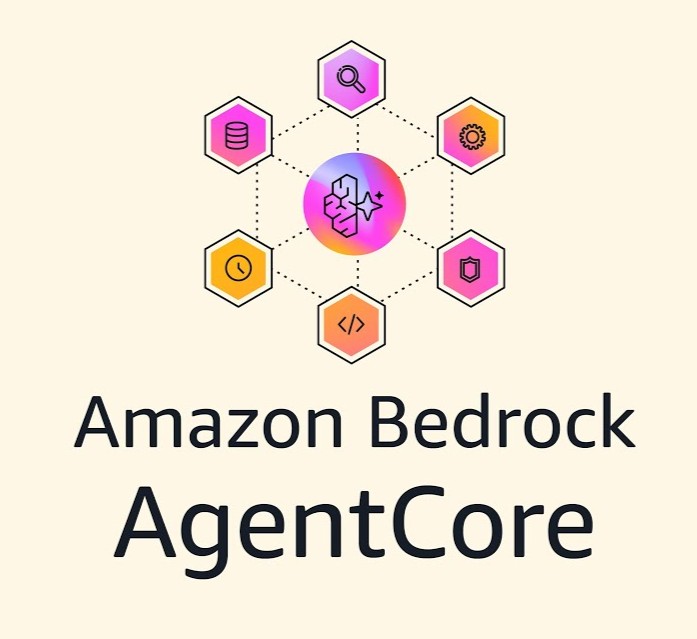
Most AI tools today answer questions. AgentCore builds AI systems that don’t just respond but act. They can be used for browsing the web, querying databases, calling APIs, running code, remembering context across sessions, and working autonomously toward a goal over multiple steps. With AgentCore, you can enable agents to take actions across tools and data with the right permissions and governance, run agents securely at scale, and monitor agent performance in production. All these without any infrastructure management.
The adoption numbers tell the real story: in just 5 months since preview, the AgentCore SDK has been downloaded over 2 million times. That’s not curiosity, but developers actively building production systems.
Amazon Bedrock Updates in 2026
Model expansion from ~60 to nearly 100 models. AWS cast the 2026 model refresh as a broad upgrade aimed at giving customers more choice without touching their existing infrastructure, adding models from Mistral, Google, NVIDIA, OpenAI, MiniMax, Moonshot, and Qwen. The mix now spans language, vision, audio, safety, and code workloads. Bedrock has moved from a text-first platform to a genuinely multimodal one.
AgentCore milestones. Policy controls reached GA in March 2026, giving enterprises precise control over what actions agents can take. They’re verified outside the agent’s reasoning loop before reaching tools or data. Stateful MCP server support and Memory streaming notifications expanded what agents can do across sessions.
OpenAI-compatible API endpoints. Amazon Bedrock now supports the latest open-weight models using both the bedrock-runtime and the bedrock-mantle endpoint. This is powered by Project Mantle, a new distributed inference engine for large-scale model serving. Teams already building on OpenAI-compatible APIs can now use Bedrock without changing their code structure.
Nova Forge SDK. Launched in 2026, this lets businesses fine-tune and customize Amazon Nova models for their specific domain, without ML engineering expertise. Enterprise-grade model customization, self-service.
Bedrock vs Azure AI Foundry vs Google Vertex AI
Choosing an AI platform in 2026 comes down to one question: what’s your existing cloud infrastructure, and where is AI’s role in your business headed?
| Factor | Amazon Bedrock | Azure AI Foundry | Google Vertex AI |
| Model variety | Nearly 100 models, multi-vendor | Strong OpenAI integration | Gemini family + open models |
| Best for | Multi-model flexibility, AWS-native teams | Microsoft/OpenAI ecosystem | Data-heavy, BigQuery users |
| Agentic AI | AgentCore: most mature, GA | Azure AI Agent Service | Vertex AI Agent Builder |
| South Asia availability | Mumbai + Singapore (full support) | Multiple India regions | Mumbai region |
| Vendor lock-in risk | Low, swap models without code changes | Medium: OpenAI-centric | Medium: Gemini-centric |
| Pricing model | Per-token + Intelligent Routing + distillation | Per-token + commitment tiers | Per-token + sustained discounts |
For teams already on AWS and for businesses in Nepal and South Asia without existing platform commitments, Bedrock is the clearest choice. The model flexibility, the maturity of AgentCore, and the full availability in the Mumbai region make it the most complete AI platform available in the region.
Business Use Cases
Customer service automation. Connect Bedrock to your product documentation via Knowledge Bases. Customer questions get answered by Claude or Nova accurately, sourced, and available 24/7. Practical for any Nepal-based e-commerce, telecom, or financial services business handling high query volumes.
Document intelligence. Upload contracts, invoices, or reports and ask questions in plain language. Extract structured data automatically. Directly relevant for Nepali fintech, legal, and HR teams managing high document volumes across multiple languages.
AI-powered developer tools. Amazon Q Developer integrates into IDEs for code suggestions, security scanning, and code explanation. For development teams, this translates to measurable productivity gains without changing the development environment.
Semantic search. Combine Bedrock with S3 Vectors and OpenSearch to let users search in natural language across your entire data store. Finding relevant results is easier regardless of exact keyword matching. AI-powered search, without a specialized search engineering team.
Amazon Bedrock for Businesses in Nepal & South Asia
Full Bedrock availability (all major models, all core features) is supported in the Asia Pacific (Mumbai) region. For businesses in Nepal, this means data stays in the region, latency stays low, and the same AI capabilities available to Fortune 500 companies in New York are available to a startup in Kathmandu.
The economics also work at smaller scale. Pay-per-token pricing with no upfront commitment means you can prototype an AI feature for a few dollars, validate it with real users, and scale it only after it proves value.
ThinkMove Solutions helps businesses in Nepal and South Asia implement AWS and the latest updates, from initial architecture decisions to production deployment and cost optimization.
The Bottom Line
Eighteen months ago, Amazon Bedrock was a promising but niche AWS service. In 2026, it’s the enterprise AI platform. Nearly 100 models, production-grade agentic infrastructure through AgentCore, and cost optimization features that make serious AI workloads economically viable for businesses of every size. For businesses in Nepal and South Asia, the opportunity is real, immediate, and can be easily accessed from your AWS account.
Ready to build with Bedrock? Talk to ThinkMove Solutions (Nepal’s AWS consulting partner) about implementing Bedrock for your business.
See how Bedrock fits into AWS’s full 2026 strategy →






How We Do it ?
Powering Growth
with Cloud & Automation


Get started in
minutes
Get the latest tech trends, tips & tools
delivered monthly.

 Microsoft Azure
 DevOps
  Software Development
  Staff Augmentation
  React JS
  HTML / CSS / JS
  Website Redesign
  Zoom
Zoom  Bulk Sms
  Cybersecurity